
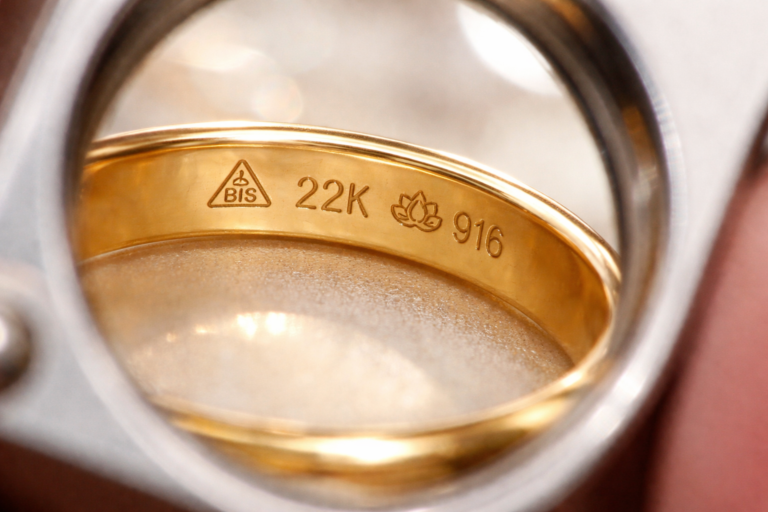
Buying gold should feel exciting, not anxious. Yet with prices high and more people shopping online, worries about fake or low-purity pieces are common. The good news is that checking whether your gold jewellery is real is easier than most people think. A few simple tests, done at home or at the counter, can tell you a great deal before you ever pay. This guide walks you through seven of them, from reading the hallmark to quick physical checks.
None of these tests alone is foolproof, but together they give you real confidence. Used alongside a trusted jeweller and proper certification, they help ensure the piece you bring home is exactly what you paid for. Think of them as a checklist you can run quickly, rather than a single magic answer.
Why Checking if Your Gold Jewellery Is Real Matters
Gold carries deep financial and emotional value, which is exactly why it attracts imitation. As prices climb and online buying grows, gold-plated or impure pieces have become more common, and many buyers only discover the problem months later when the colour fades or a resale jeweller flags low purity. A little verification upfront protects both your money and your peace of mind.
There are two separate questions worth keeping in mind. The first is whether the piece is gold at all, rather than plated brass or another metal. The second is how pure that gold is, since real gold jewellery is rarely pure gold and its value depends entirely on the karat. The tests below help with both, though some are better at one than the other.
Knowing these checks also makes you a more confident buyer. When you understand what to look for, you ask better questions, spot red flags early, and are far less likely to be talked into a poor purchase. That confidence is worth as much as the tests themselves, since a calm, informed buyer is a hard one to mislead.
7 Simple Tests to Check if Your Gold Jewellery Is Real
Here are seven practical tests, starting with the most reliable. The first two matter most, so begin there and treat the physical tests as useful backups rather than final proof on their own.
1. Look for the BIS Hallmark and HUID
The single most reliable check is the hallmark. In India, genuine gold jewellery carries a BIS hallmark, which certifies purity. Look for three things stamped or laser-etched on the piece: the triangular BIS logo, the purity grade, and a six-character alphanumeric HUID code.
You can verify the HUID in the free BIS Care app before paying. If a piece has no hallmark, or the jeweller is reluctant to show it, treat that as a serious warning sign. A proper gold jewellery hallmark is your strongest single assurance of authenticity. Because it is laser-etched and registered, it is also far harder to fake than any sticker or verbal promise.
2. Check the Purity Stamp
Alongside the BIS logo, look for the purity stamp that tells you the karat. Common marks are 916 for 22K gold and 750 for 18K gold. These numbers reflect the percentage of pure gold, so 916 means about 91.6 percent pure.
This step matters because gold jewellery purity directly affects value and resale. A common mistake is assuming all gold is the same; confirming the karat ensures you are paying the right price for what you are actually getting, rather than taking the seller’s word for it. It also helps you compare quotes fairly between jewellers, since two pieces of the same weight can differ in purity and therefore in true value.
3. The Magnet Test
Gold is not magnetic, so a simple magnet offers a quick first screen. Hold a strong magnet close to the piece. If the jewellery is pulled toward the magnet, it contains iron or another magnetic metal and is not pure gold.
Keep in mind this test has limits. Some fakes use non-magnetic metals, so passing the magnet test does not prove a piece is real. It is best used to quickly catch obvious imitations rather than to confirm authenticity on its own.
4. The Skin Discoloration Test
Real gold does not react with your skin. If wearing a piece leaves a green, black, or grey mark, the metal likely contains copper, brass, or other alloys in high amounts. Pure and high-karat gold stays put without staining.
This is a useful everyday signal rather than a precise test. Sweat, lotions, and skin chemistry can affect results, so treat discoloration as a prompt to investigate further, not as absolute proof on its own.
5. The Float Test
Gold is dense and heavy, so it sinks. Drop the piece gently into a glass of water. Real gold will sink quickly to the bottom, while many fakes, being lighter, may hover or float.
Like the others, this is a rough screen. Some counterfeit metals are also dense enough to sink, so a passing result is reassuring but not conclusive. Still, a piece that floats is almost certainly not solid gold.
6. The Vinegar Test
Gold is highly resistant to corrosion, which is part of what makes it valuable. Place a few drops of white vinegar on a discreet spot. Real gold will not change colour, while fake or plated metals may darken or fizz where the acid reacts.
Use this carefully and only on a hidden area, and never on stone-set or antique pieces. Because it carries a small risk to finishes, many people skip it in favour of the hallmark check and a professional test.
7. Professional XRF Testing
When you want certainty, nothing beats a professional test. Jewellers use XRF machines that read the exact metal composition without damaging the piece. This tells you precisely how much gold is present and at what purity.
This is the most accurate option on this list and the best choice before a major purchase or sale. A reputable jeweller will happily test a piece for you, and the result removes any doubt that home checks leave behind. For an heirloom or a high-value buy, the few minutes it takes is well worth the certainty it provides.
What the Home Tests Can and Cannot Tell You
It helps to be honest about what these checks achieve. The physical tests, the magnet, skin, float, and vinegar checks, are good at catching obvious fakes. If a piece fails several of them, you can be fairly sure something is wrong.
What they cannot do is confirm exact purity. A ring might be real gold yet lower in karat than claimed, and no home test will reveal that precisely. For that, you need the hallmark and, ideally, professional testing.
So treat the seven tests as layers. The hallmark and HUID give you certified assurance, the physical tests offer quick supporting signals, and XRF testing provides the final word. Relying on any single check, especially a physical one, can give false confidence.
A practical approach looks like this:
- Start with the hallmark and HUID, and verify it in the BIS Care app.
- Confirm the purity stamp matches what you are being charged for.
- Use the magnet, skin, and float tests as quick supporting screens.
- For anything high-value or uncertain, ask for professional XRF testing.
How to Avoid Buying Fake Gold in the First Place
The best defence is prevention. A few habits make it far less likely you will ever bring home a fake.
Buy only hallmarked jewellery. The BIS hallmark exists precisely to protect you, and insisting on it filters out most problems before they start. Avoid pieces sold without certification, however attractive the price.
Always get a clear, itemised bill. It should list the net gold weight, purity, making charges, and any stone weight separately. This protects you at the time of purchase and helps enormously with future resale or exchange.
Be cautious with unusually low prices. Gold rates track daily market values, so a deal that seems far too good is a warning sign rather than a bargain. The same caution applies to deposit and savings schemes, where it is safer to stick with established, reputable names.
Finally, buy from a trusted jeweller. A long-standing, transparent seller has every reason to protect its reputation and little reason to risk it. Established jewellers stand behind their pieces, offer fair exchange terms, and make verification easy rather than awkward.
Follow the 7 Simple Steps to Check the Gold Jewellery
Checking whether your gold jewellery is real does not require special expertise. With a hallmark check, a few simple physical tests, and professional verification for anything significant, you can buy with genuine confidence. The hallmark and HUID do most of the heavy lifting, while the physical tests offer quick reassurance along the way.
Above all, prevention beats correction. Insist on hallmarked pieces, demand a clear itemised bill, be wary of prices that seem too good to be true, and buy from a jeweller you trust. Do that, and the question of whether your gold is real largely takes care of itself. When you are ready to buy with full peace of mind, choose certified, hallmarked gold jewellery from a trusted name like Charvi Jewels.
Frequently Asked Questions
Start by checking for the BIS hallmark and HUID code. Then run quick physical screens: gold is non-magnetic, sinks in water, and does not stain your skin. These home tests catch obvious fakes, but only a hallmark or professional XRF test confirms exact purity.
The BIS hallmark is the most reliable everyday check, since it certifies purity and carries a verifiable HUID code. For absolute certainty, professional XRF testing reads the exact metal composition without damage. Together, these two methods are far more dependable than any home test alone.
No. Gold is not magnetic, so real gold will not be pulled toward a magnet. If your jewellery reacts strongly to a magnet, it contains iron or other magnetic metals and is not pure gold. However, passing this test alone does not prove a piece is genuine.
Green or black marks usually mean the metal contains a high amount of copper or other alloys rather than pure gold. High-karat real gold does not normally stain the skin. Sweat and lotions can play a role too, so use discoloration as a signal to investigate, not proof.
The number 916 indicates 22K gold, meaning about 91.6 percent pure gold. Similarly, 750 marks 18K gold at roughly 75 percent purity. These purity stamps appear alongside the BIS hallmark and tell you exactly how much pure gold is in the piece, which affects its value.
The float test is only a rough screen. Real gold is dense and sinks quickly, so a piece that floats is almost certainly not solid gold. But some fake metals are also dense enough to sink, so passing the test is reassuring rather than conclusive proof of authenticity.
Use it cautiously. Apply only a drop on a hidden spot, and avoid stone-set, plated, or antique pieces, since acid can damage finishes and stones. Real gold will not change colour, while fakes may darken or fizz. Many buyers skip it in favour of the hallmark check.
HUID stands for Hallmark Unique Identification. It is a six-character alphanumeric code laser-inscribed on each hallmarked piece, acting like the jewellery’s identity proof. You can verify it in the free BIS Care app to confirm the piece is genuine, registered, and matches its stated purity.
Generally yes. Hallmarked jewellery is easier to resell or exchange because it reassures the next buyer of its purity. Unhallmarked pieces often face doubt and lower offers. Keeping your itemised bill alongside the hallmark further strengthens resale and exchange value down the line.
Buy only hallmarked pieces, insist on an itemised bill listing weight, purity, and charges, and be wary of prices that seem too good to be true. Most importantly, buy from a trusted, established jeweller who makes verification easy rather than avoiding it.