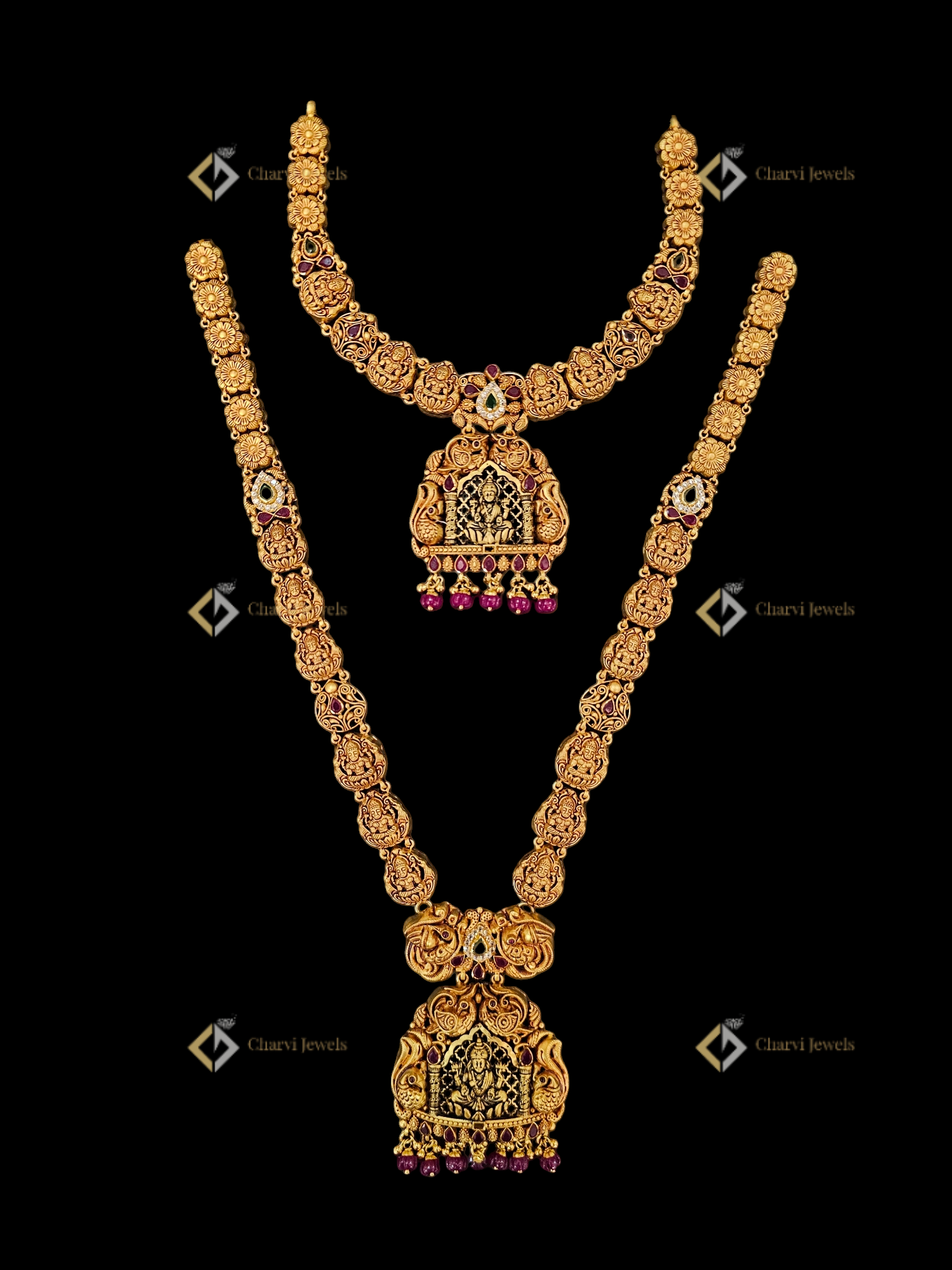
What Makes Temple Lakshmi Heritage Gold Haram Haram So Special?
Not every gold haram carries the same weight in meaning or in craft. The Temple Lakshmi Heritage Gold Haram is built on a foundation of devotion, skill, and tradition. Here is what sets it apart from anything else you will find on a shelf.
The Sacred Motif of Goddess Lakshmi
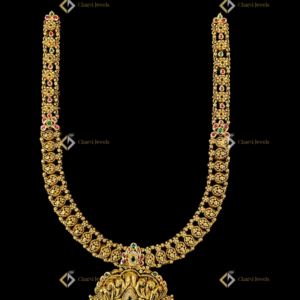
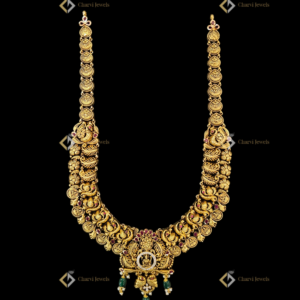
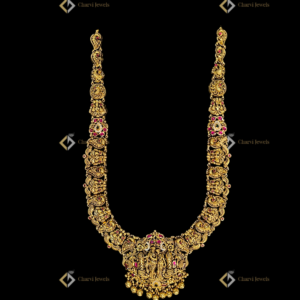
At the heart of this haram sits the divine figure of Goddess Lakshmi the deity of wealth, grace, and auspiciousness. In South Indian culture, wearing Lakshmi on your body during a wedding is more than a style choice. It is a blessing you carry with you as you step into your new life.
The Lakshmi motif on this haram is crafted with extraordinary detail. Every curve of the goddess, every fold of her saree, every petal of the lotus she rests upon all of it is painstakingly carved by skilled artisans who follow a tradition passed down through generations.
Heritage Craftsmanship in Every Link
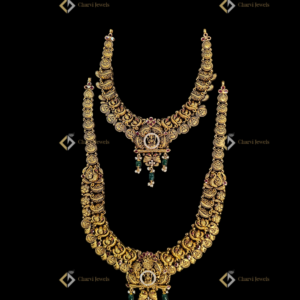
The body of this haram reflects the best of temple jewellery gold haram designs. The chain is built using traditional nakshi work, a hand-engraving technique where gold is carved into detailed patterns that catch the light with every movement. This is not machine-made jewellery. Each link of this haram has a human hand behind it.
Traditional motifs like mangoes, lotus buds, and small deity coins run through the length of the haram, creating a visual rhythm that feels both orderly and alive. When you wear it, the haram moves with you, each part glinting softly against your bridal silk saree.
Crafted in 22 Karat Gold
The Temple Lakshmi Heritage Gold Haram is made in 22 karat gold, the standard used for South Indian bridal jewellery for generations. 22K gold strikes the perfect balance between purity and strength. It is soft enough to allow intricate hand-carving, yet durable enough to hold its shape and shine across decades of use.This is the kind of jewellery you pass down. Your daughter will wear what you wore.
The Story Behind Temple Jewellery in South India
To truly understand why this haram matters, it helps to know where temple jewellery comes from.
Born in the Temples of Tamil Nadu
Temple jewellery has its origins in the Tanjore and Madurai traditions of Tamil Nadu, where goldsmiths created elaborate ornaments for the deities in the temples. These pieces were worn by devadasis the temple dancers during sacred performances. Over centuries, this art form moved from temple halls into the homes of Tamil brides.
The motifs you see on temple jewellery Lakshmi, peacocks, lotus, mango are not decorative coincidences. Each one carries a specific spiritual meaning. Lakshmi brings prosperity. The peacock signals grace and beauty. The lotus represents purity. The mango stands for fertility and abundance.
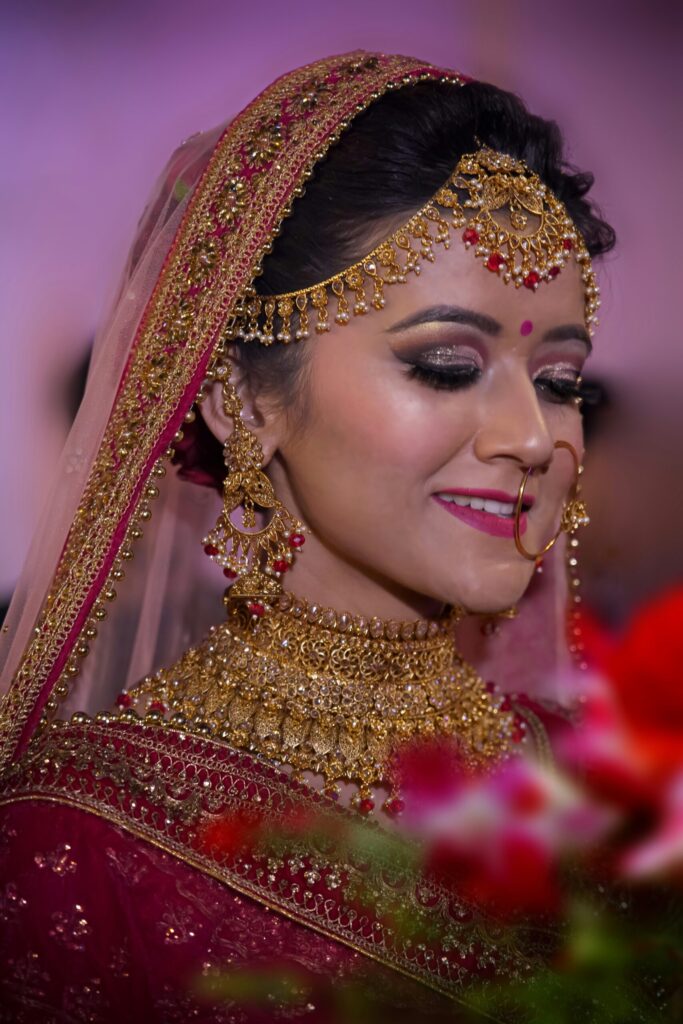
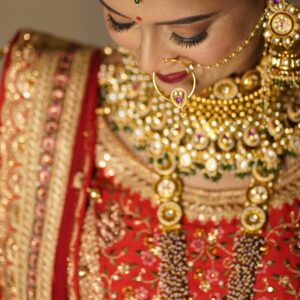
When a bride wears temple jewellery gold haram designs on her wedding day, she is not just following fashion. She is participating in a tradition that stretches back centuries.
Why This Tradition Stays Relevant Today
In an age of lab diamonds and minimalist designs, why do Tamil brides still choose temple gold? Because identity does not go out of style. The Temple Lakshmi Heritage Gold Haram is proof that the old ways can be honoured without feeling outdated. It is rooted in tradition but crafted with the modern bride in mind: the right weight, the right length, the right amount of detail.
Frequently Asked Questions
- The Temple Lakshmi Heritage Gold Haram at Charvi Jewels is crafted in 22 karat gold, which is the standard purity used for traditional South Indian bridal jewellery. 22K gold offers the ideal combination of purity, warmth in colour, and the malleability needed for fine hand-engraved temple designs. Every piece comes with a hallmark certification confirming its gold purity.
- Absolutely. This haram is specifically designed with the South Indian Tamil bride in mind. The Goddess Lakshmi motif is deeply auspicious and considered ideal for weddings. It is appropriate for every ceremony from the Nichayathartham and Muhurtham to the Grihapravesh and first pooja as a married woman. It pairs beautifully with Kanjivaram silk, which is the traditional bridal choice for Coimbatore brides.
- Yes. You are warmly welcome to visit our store to see the Temple Lakshmi Heritage Gold Haram in person, try it on, and ask any questions you may have. Our team will be happy to assist you in finding the right piece for your wedding day.
- The Temple Lakshmi Heritage Gold Haram works beautifully as the centrepiece of your bridal jewellery set. You can pair it with a gold temple choker or a pearl choker above it for a layered look. Complement it with long temple earrings, a vanki (armlet), gold bangles, and a maang tikka. If you prefer a more traditional, single-statement look, let the haram stand alone and keep the remaining jewellery simple. Our team at Charvi Jewels can help you build a complete bridal look around this haram.
- A temple jewellery haram is specifically inspired by the ornaments that were historically crafted for South Indian temples and worn by classical dancers. The key differences are in the motifs and the crafting technique. Temple jewellery uses sacred motifs of deities like Goddess Lakshmi, peacocks, elephants, lotus flowers, and mango shapes and is typically hand-carved or hand-engraved. A regular gold haram may use simpler geometric or floral designs without the sacred cultural references. Temple jewellery harams also tend to have an antique gold finish or a rich matte glow compared to high-polished modern harams.