The Craftsmanship Behind the Temple Coin Gold Peacock Haram
The Art of Temple Jewellery Making
Temple jewellery has its roots in the Chola and Vijayanagara empires. Originally created as offerings to deities and as adornments for temple dancers, these designs have evolved over centuries into some of the most sought-after bridal jewellery in South India.
The gold used in temple jewellery is typically worked using a technique called repoussé, where the gold sheet is shaped from behind to create raised, three-dimensional patterns. This gives the jewellery a depth and character that cast or machine-made pieces simply cannot replicate.
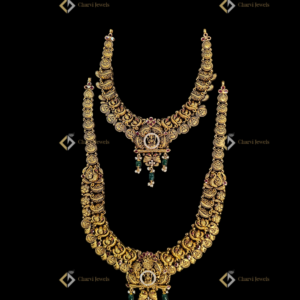
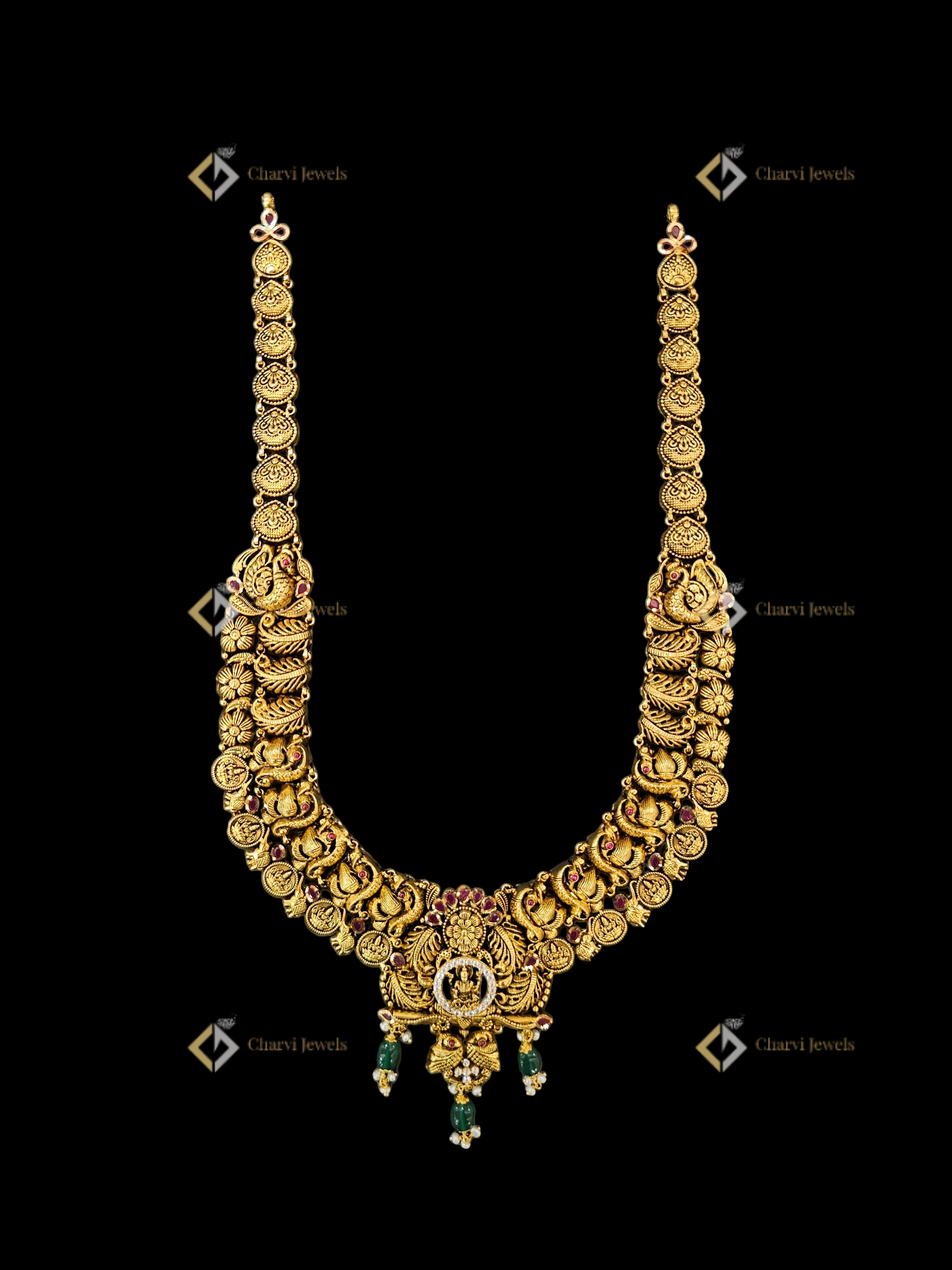
The Temple Coin Gold Peacock Haram carries this same spirit of craftsmanship. Each coin pendant features fine detailing that reflects the skill and patience of the artisan who made it.
Peacock Motif – A Design Choice With Meaning
The peacock is not a random design element. In Tamil tradition, the peacock is the vahana (vehicle) of Lord Murugan, widely worshipped across Tamil Nadu. For a bride wearing this haram at a Tamil wedding, the peacock is not decorative. It is devotional.
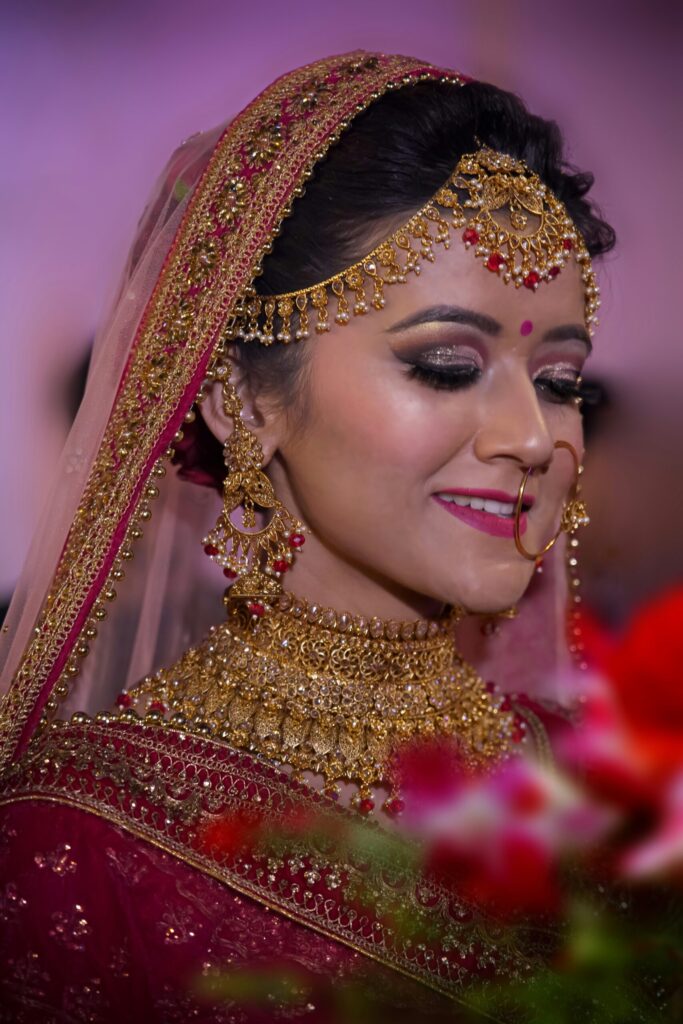
The way the peacock feather spreads across the body of the necklace creates a visual rhythm that sits beautifully on the neckline. Whether you are wearing a Kanchipuram silk saree, a half saree, or a contemporary bridal lehenga, this haram adapts without losing its identity.
What Makes Coin Peacock Gold Haram Different from the Rest?
There are hundreds of gold haram designs in the market today. So why does this one stand apart?
Every element of this haram has been thought through. From the deeply embossed temple coin motifs to the spread of peacock feather work, the piece tells a story at every inch. The temple coin pendants carry the likeness of Goddess Lakshmi, a design that has been passed down through generations of South Indian goldsmithing tradition.
The peacock motif adds a layer of cultural richness. In South Indian bridal tradition, the peacock symbolises beauty, grace, and devotion. When this symbol is brought into a haram, it creates something that goes beyond fashion. It becomes an heirloom.
Frequently Asked Questions
-
A temple coin gold haram is a long necklace that features embossed coin-shaped pendants with temple deity motifs, typically Goddess Lakshmi or Goddess Saraswati. Unlike a regular gold chain or necklace, a temple haram is crafted using traditional South Indian goldsmithing techniques where the surface is shaped by hand to create raised, three-dimensional designs. It carries a cultural and devotional significance that a plain gold necklace does not.
-
The right length depends on your height, neckline, and the blouse you plan to wear. A haram that falls to the chest or just below the bust is the most versatile for bridal looks. If you are petite, a shorter haram creates a proportionate look. If you are taller, a longer haram adds drama. Our jewellery experts can guide you when you visit our store in Coimbatore.
-
Yes. The Temple Coin Gold Peacock Haram is not limited to weddings. It is a perfect choice for temple visits, festival occasions like Navaratri and Diwali, family functions such as baby showers and ear-piercing ceremonies, and anniversary celebrations. The traditional design ensures it never looks out of place at any cultural gathering.
-
The haram works best as the centrepiece of your bridal jewellery. Pair it with matching temple coin jhumkas, a maang tikka with peacock detailing, and a vaddanam (waist belt) in a complementary temple design. Keep upper arm jewellery like vanki simple so the haram gets the attention it deserves. Avoid over-layering shorter necklaces that can crowd the neckline.
-
Yes. Harams can be customized in length and weight depending on your requirements. A lighter version is ideal if you prefer comfort during long ceremonies, while a heavier version adds the visual grandeur that many brides desire. Speak to our team in R.S. Puram, Coimbatore for customisation options.